

Dreamed Through Water : On Parker McComb’s Hydrohalo
« Rêvant au bord de la rivière, j’ai donné mon imagination à l’eau, à l’eau verte et claire… Il n’est pas besoin que la rivière soit à nous ; l’eau n’est pas à nous. L’eau anonyme connaît tous mes secrets. »
“Dreaming beside the river, I gave my imagination to the water, the green, clear water… The stream does not have to be ours; the water is not ours. Anonymous water knows all my secrets.”
— Gaston Bachelard, L’Eau et les Rêves, 1942
Curatorial essay by Kate N.H. Park
In L’Eau et les Rêves (Water and Dreams, 1942), Gaston Bachelard articulates how water—through its impersonal fluidity and timeless flow—dissolves the boundaries of the ego and absorbs the most intimate reveries. Conceived as an anonymous, oneiric medium to which imagination yields itself without possession or constraint, water functions in Bachelard’s thought not as image but as formative substance. This understanding offers a precise point of entry into Parker McComb’s solo exhibition Hydrohalo, which approaches the aquatic element not as mere motif or setting but as a shared psychic space through which memory, sensation, and subjectivity are set in motion.
For Bachelard, matter is what dreams through us. Water, in particular, solicits oneiric states, dissolving edges between self and elsewhere, past and present. In McComb’s work, that dissolution is both biographical and formal. Born in Florida, where contact with water is less an influence than an inevitability, water appears not as motif but as condition: the medium through which memory accumulates, identity drifts, and form resists closure. Hydrohalo, McComb’s third solo exhibition in Seoul, marks eight years of living and working in Korea—an interval defined less by arrival or belonging than by sustained immersion. These conditions persist in the exhibition not as narrative memory but as formal residue. Like water itself, Hydrohalo moves through states of suspension—between past and present, origin and displacement, buoyancy and gravity, surface and depth. The exhibition gathers eight works produced across the artist’s Korean years and reads them as a tide chart of in-between life—each a small weather system, briefly holding together what would otherwise disperse.
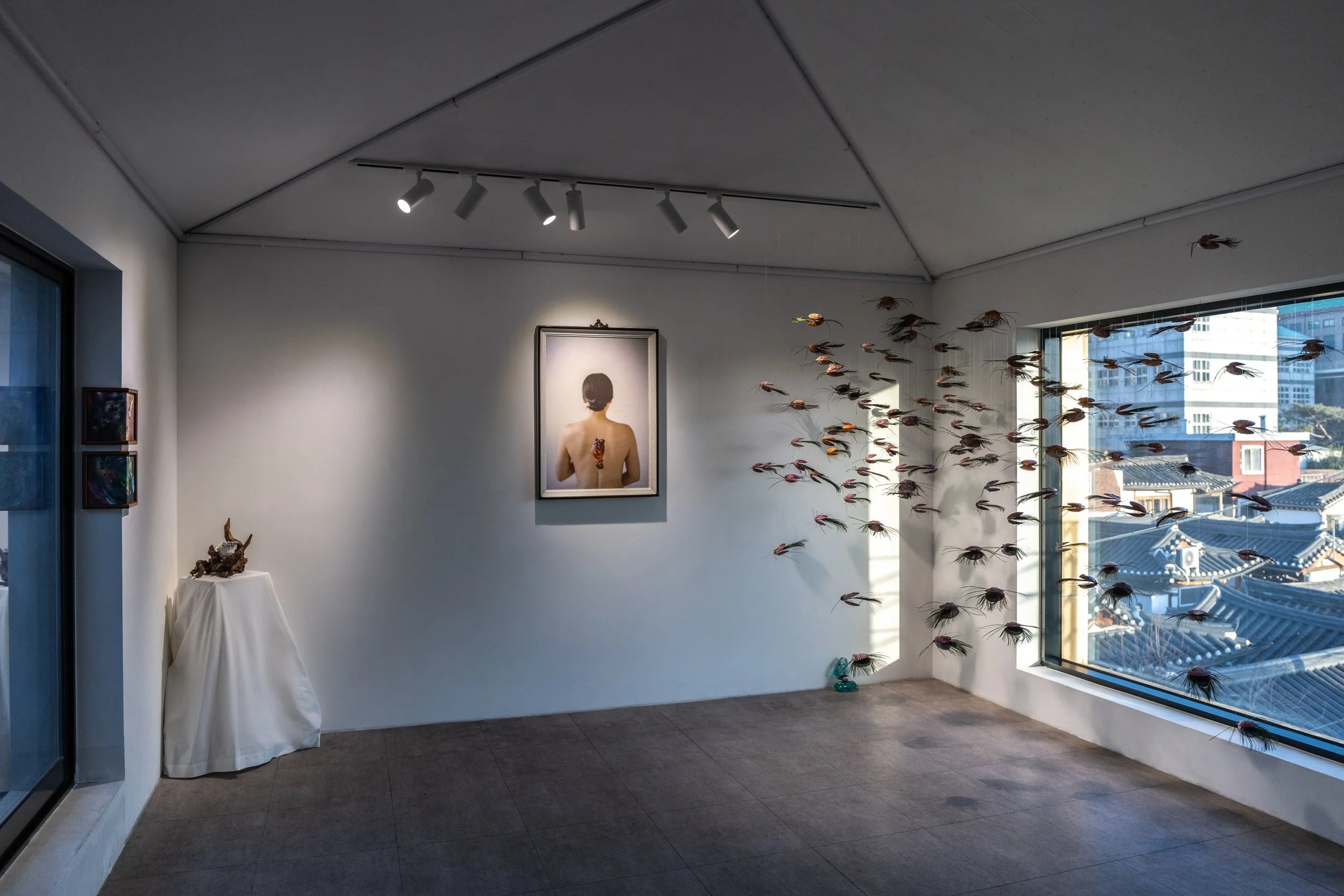
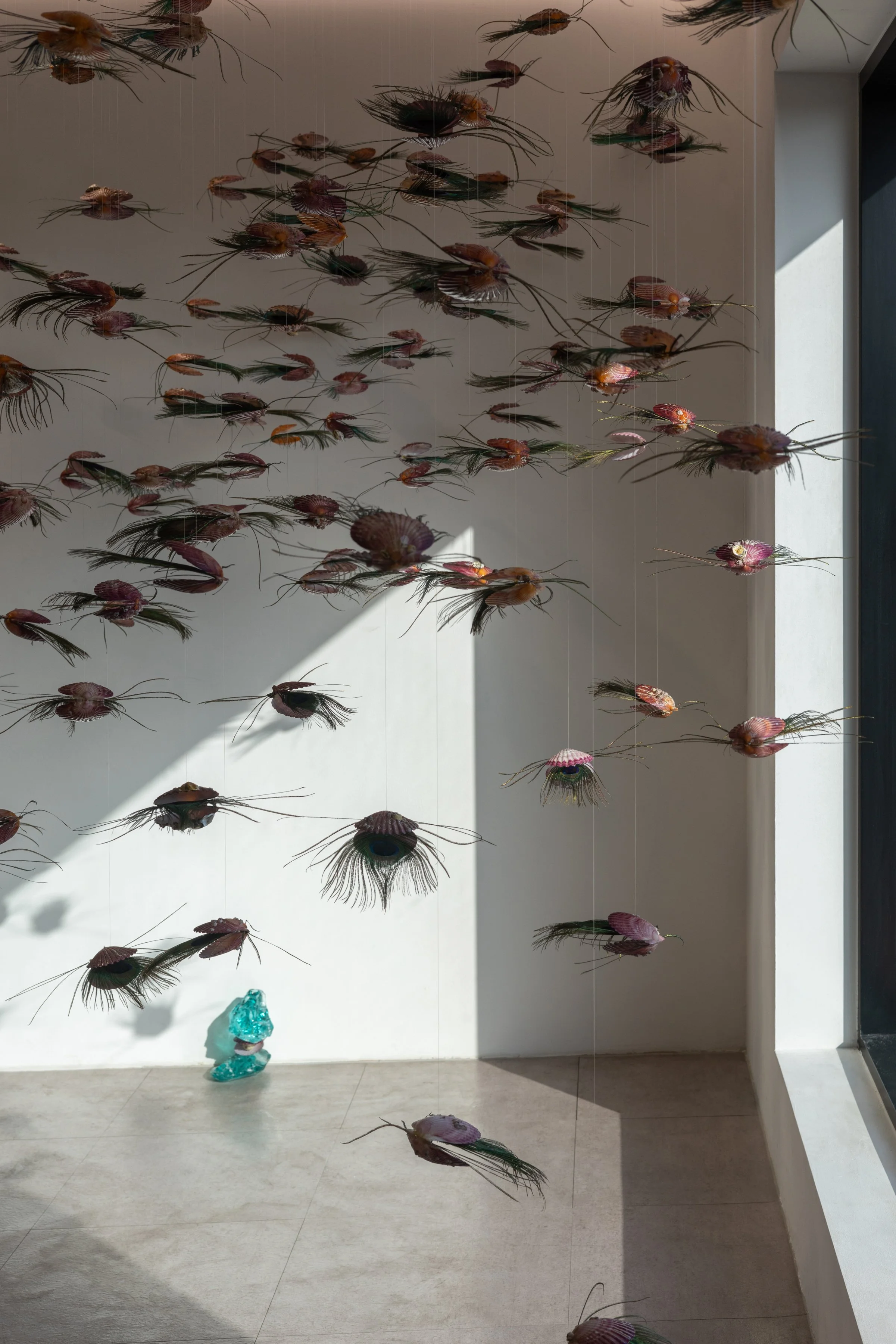
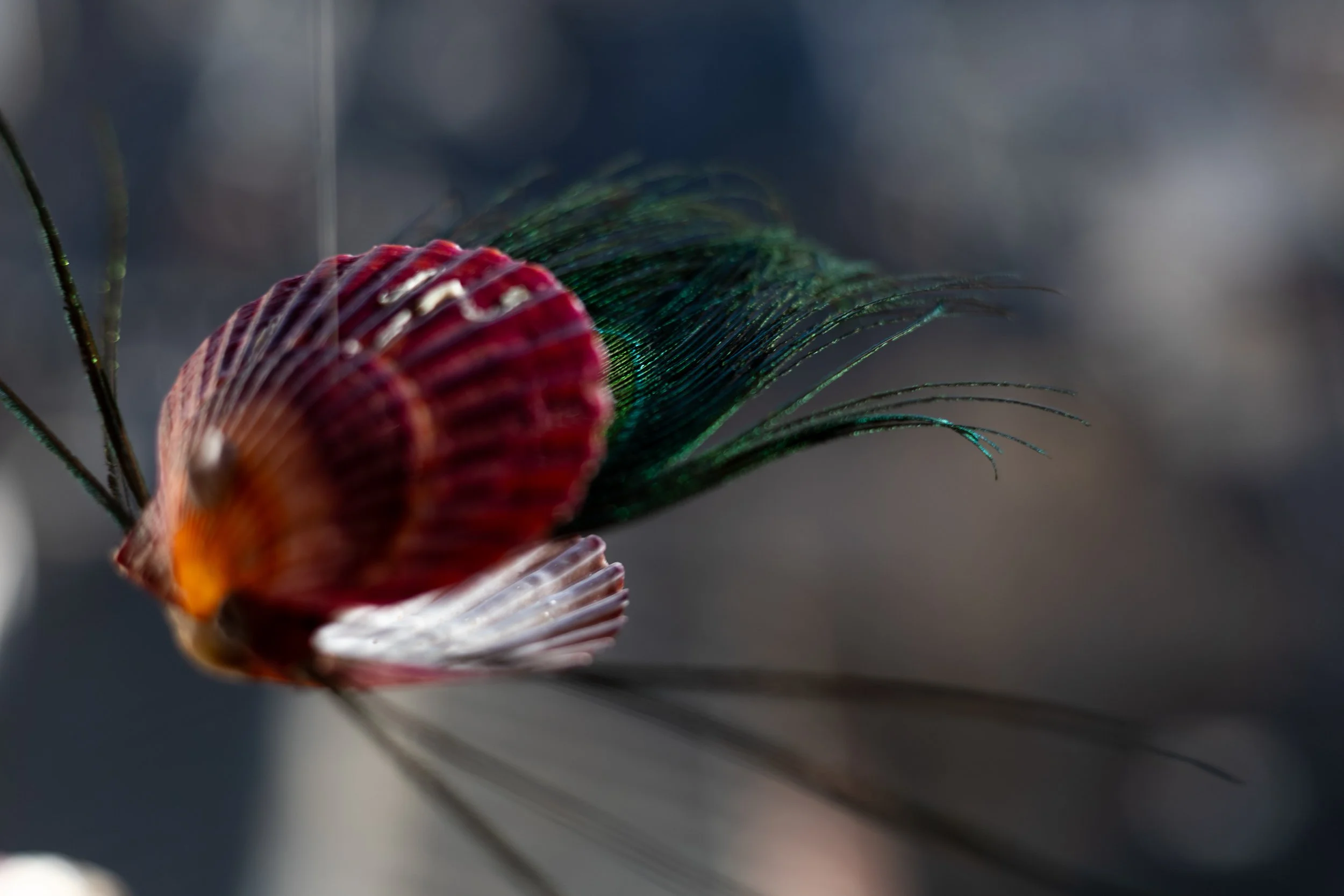
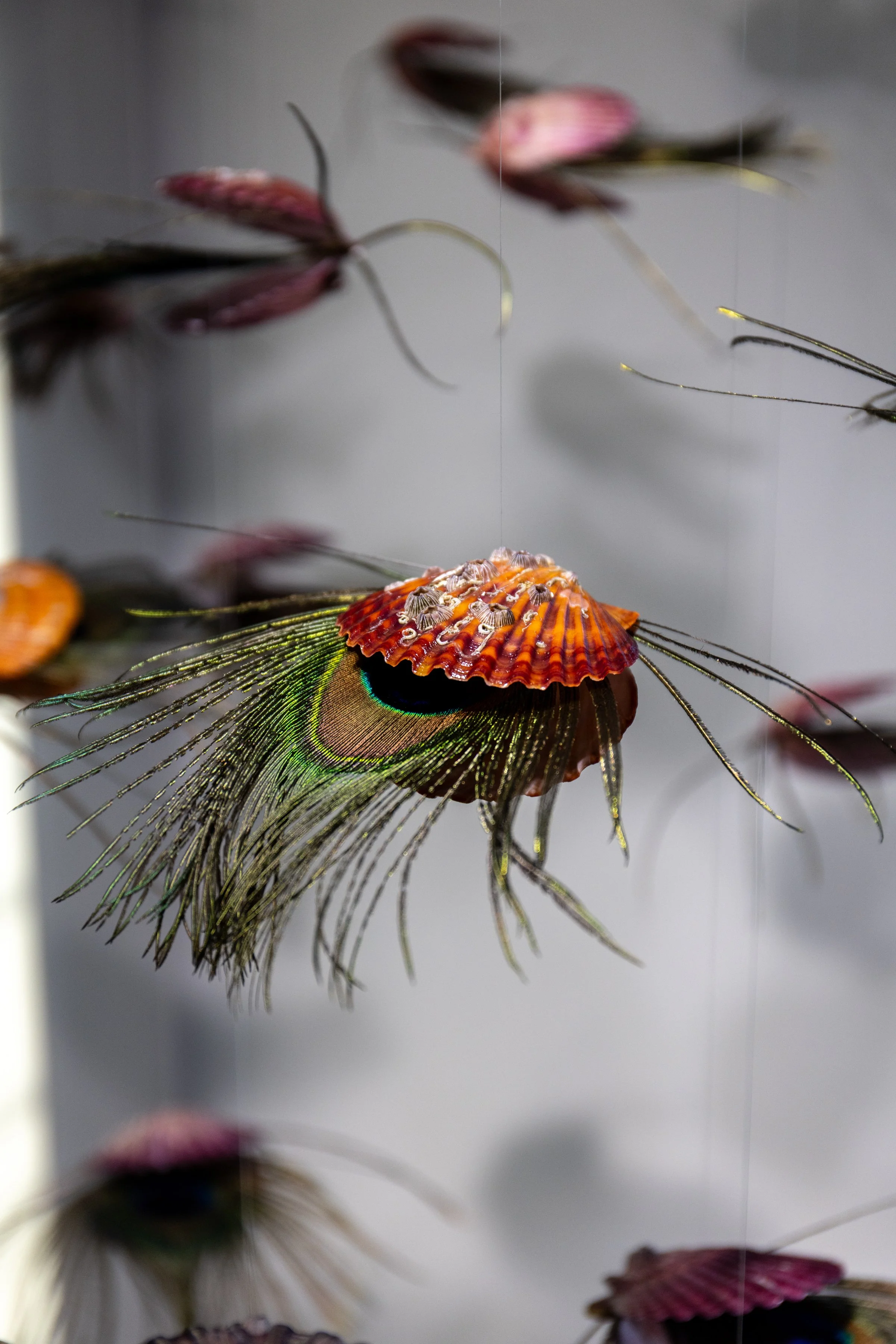
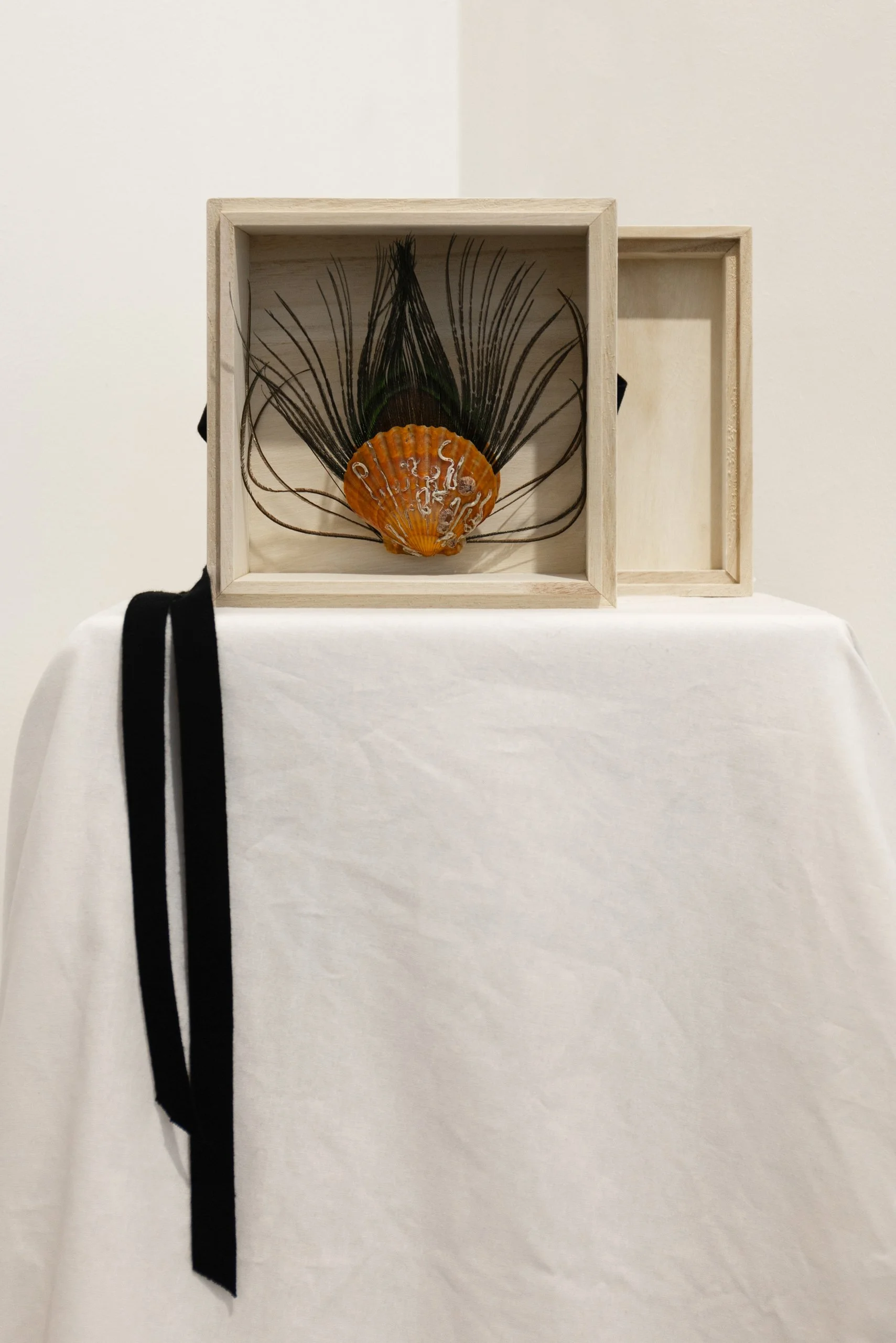
At the center of Hydrohalo is AquaAngels (2026), a suspended installation composed of over 100 scallop shells paired with peacock feathers. Hung individually at varying heights, the elements form a dispersed field that activates the gallery’s vertical volume and natural light, privileging movement, parallax, and durational viewing over frontal address. Material contrast is central: the shells—ribbed and mineral—register weight and origin, while the feathers introduce extension, ornament, and optical variability. As the viewer moves, iridescent eyespots intermittently catch the light, producing fleeting chromatic shifts that resist visual fixation. Individually delicate yet immersive in aggregate, the installation’s spatial rhythm oscillates between organic dispersal and careful orchestration, recalling marine life, ceremonial ornament, and devotional relics without settling into a single symbolic register. Operating in a liminal register between taxonomy and abstraction, AquaAngels stages buoyancy not as ease but as a sustained condition, transforming air into a material field and situating the viewer within a provisional ecology of suspension and drift. In doing so, the work establishes not only the exhibition’s visual center but also its governing logic of suspension—one that extends beyond the installation into the spatial and photographic structures of Hydrohalo as a whole.
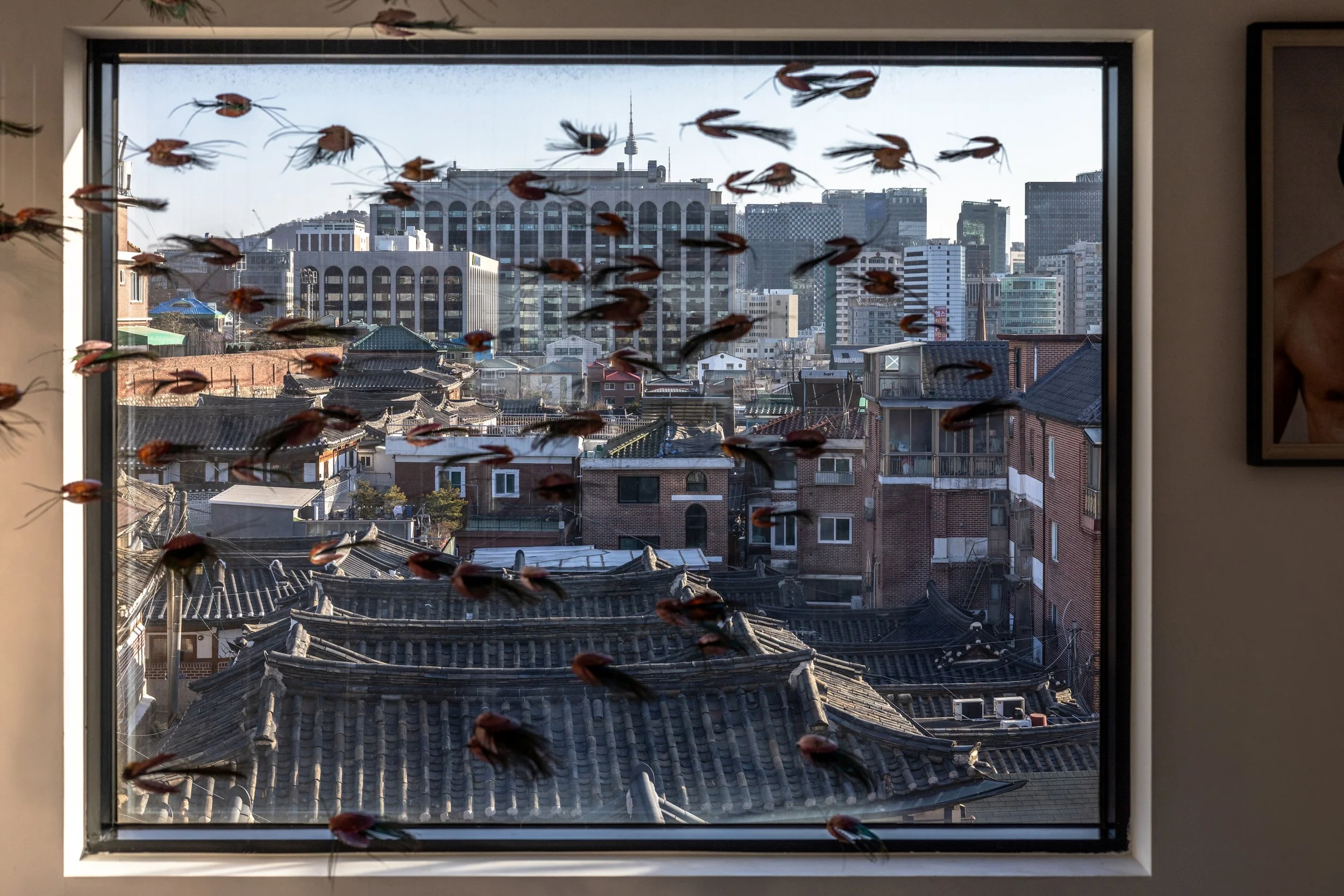
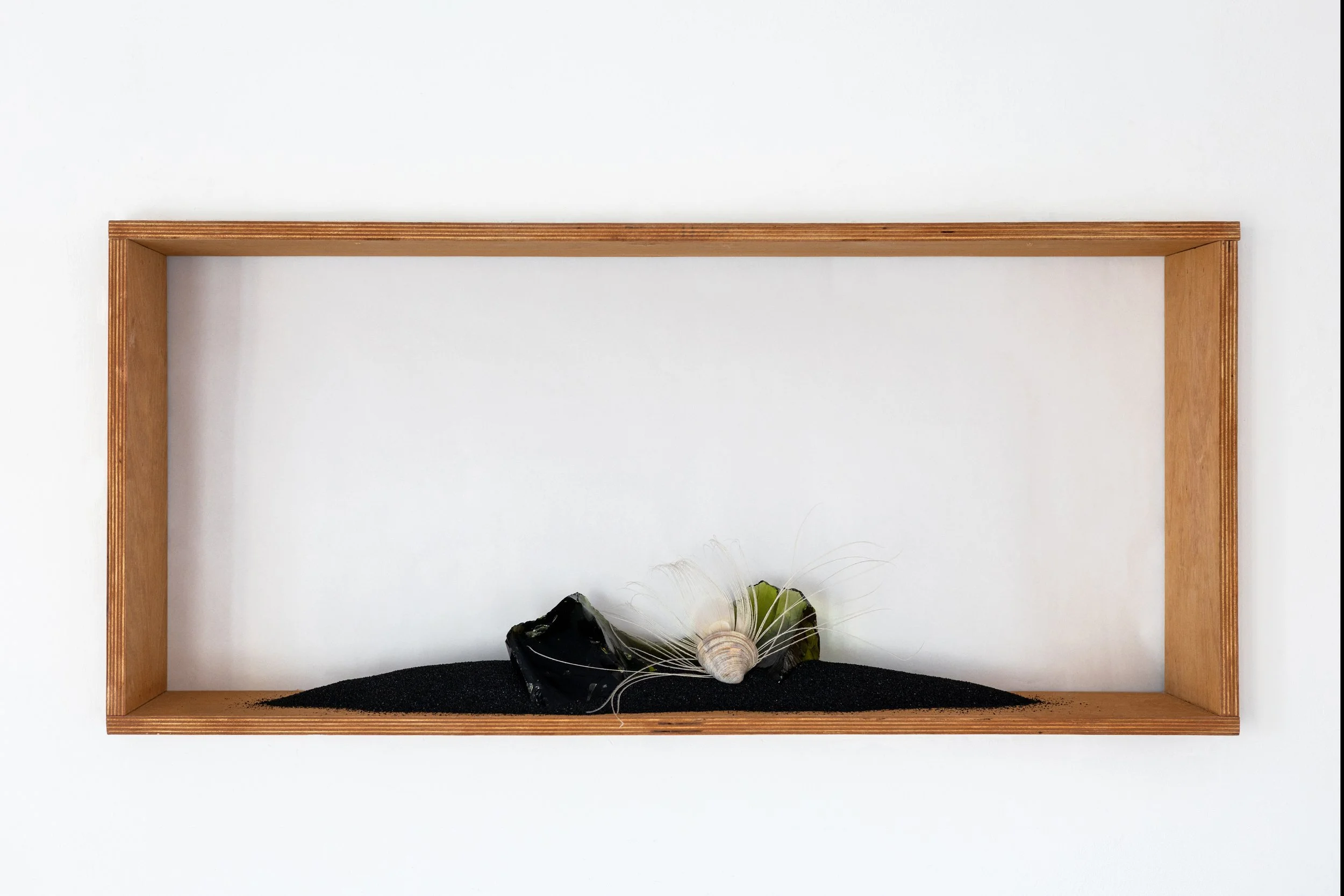
Hydrohalo is informed not only by water as material and metaphor, but also by the specific conditions of its exhibition context. The artist has described how an initial visit to Combine Works Gallery space—its natural light, vertical volume, and framed views onto Bukchon’s tiled roofs and narrow alleys in Seoul—prompted him to imagine works “suspended as though hovering between stillness and movement.” This spatial intuition expands and extends the artist’s earlier experiments with object-based installation, in which scallop shells and peacock feathers appeared as provisional assemblages. This inquiry coalesced in the concept Nautivolant—from nauti (sea) and volant (flight)—before being distilled into the installation’s final title, AquaAngels, which condenses McComb’s ongoing engagement and fixation on buoyancy in water as both material condition and poetic form. In its expanded form, materials are dispersed, illuminated, and released into the gallery’s air, shifting the work from objecthood to an immersive field. The result is not a site-specific illustration but a calibrated spatial proposition—one that allows McComb to test the limits of fragility, buoyancy, and transcendence within a carefully articulated spatial and poetic economy.
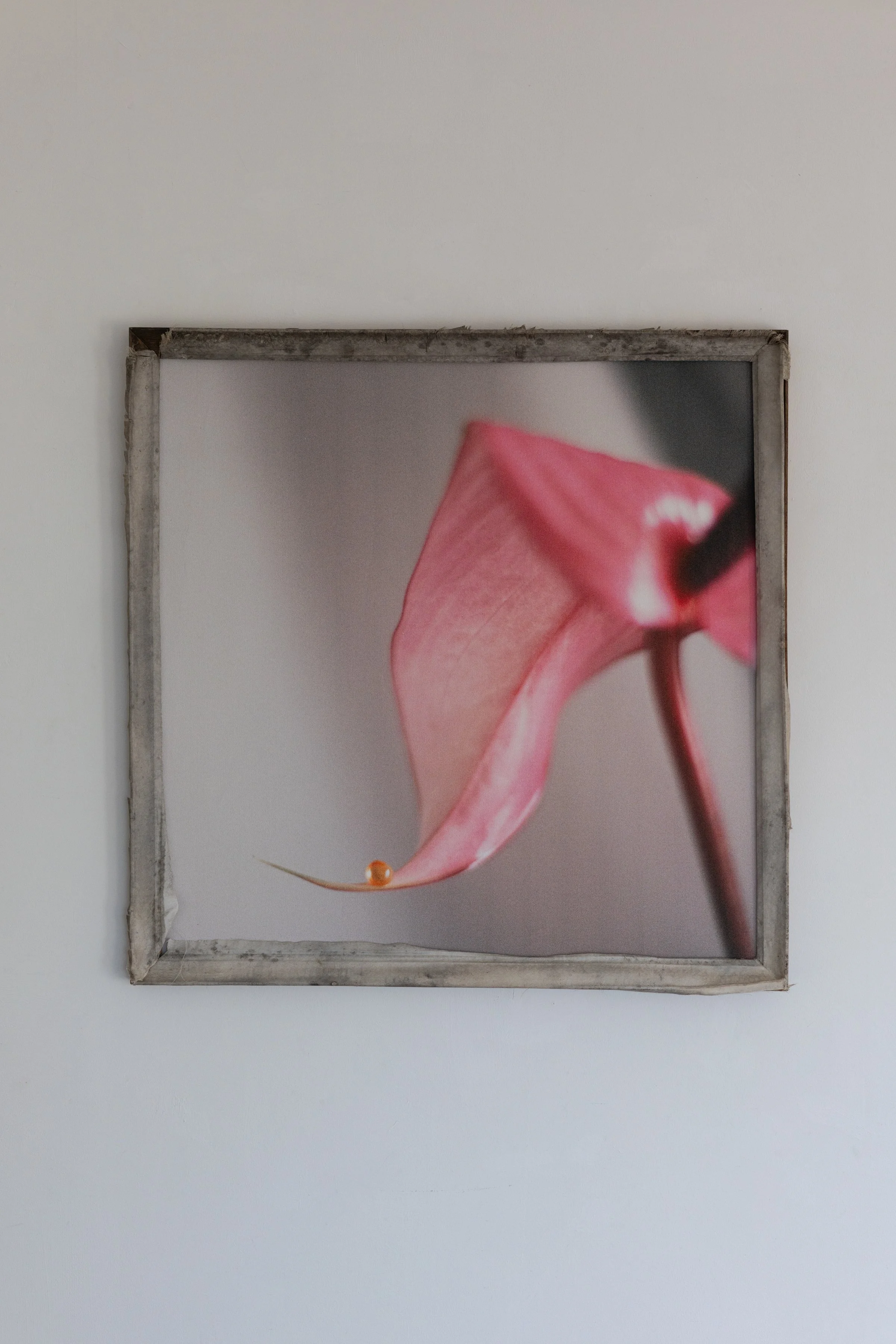
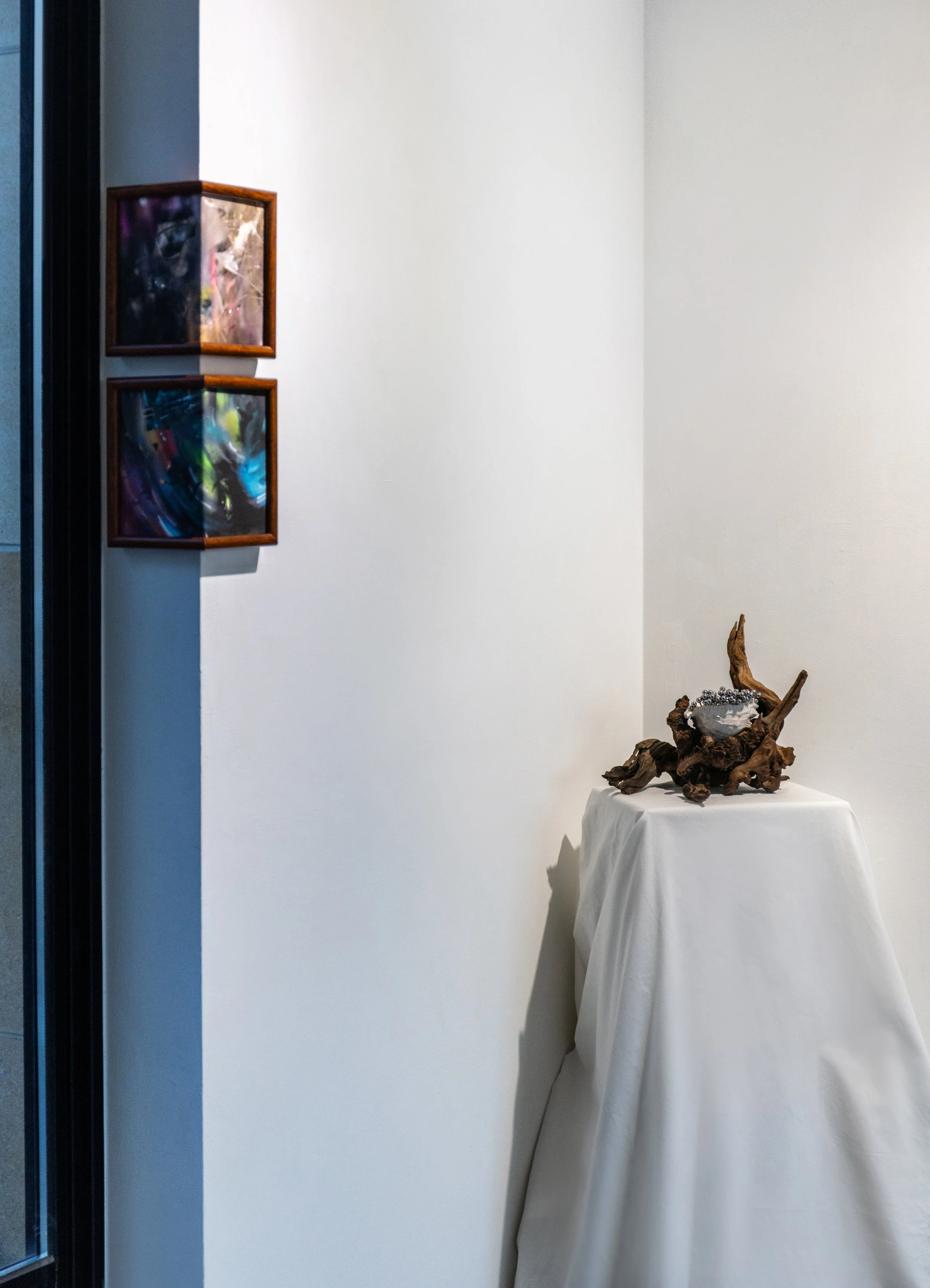
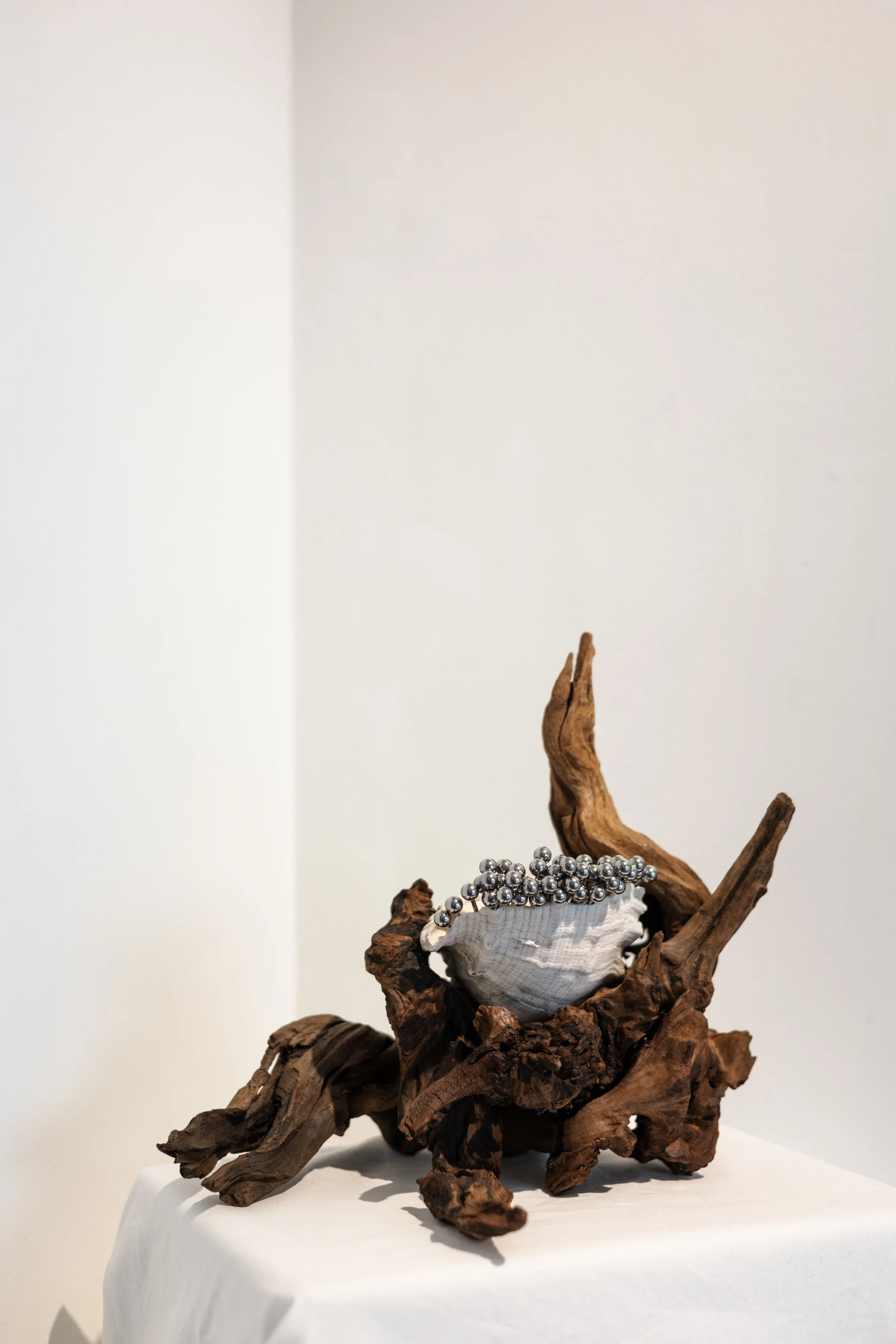
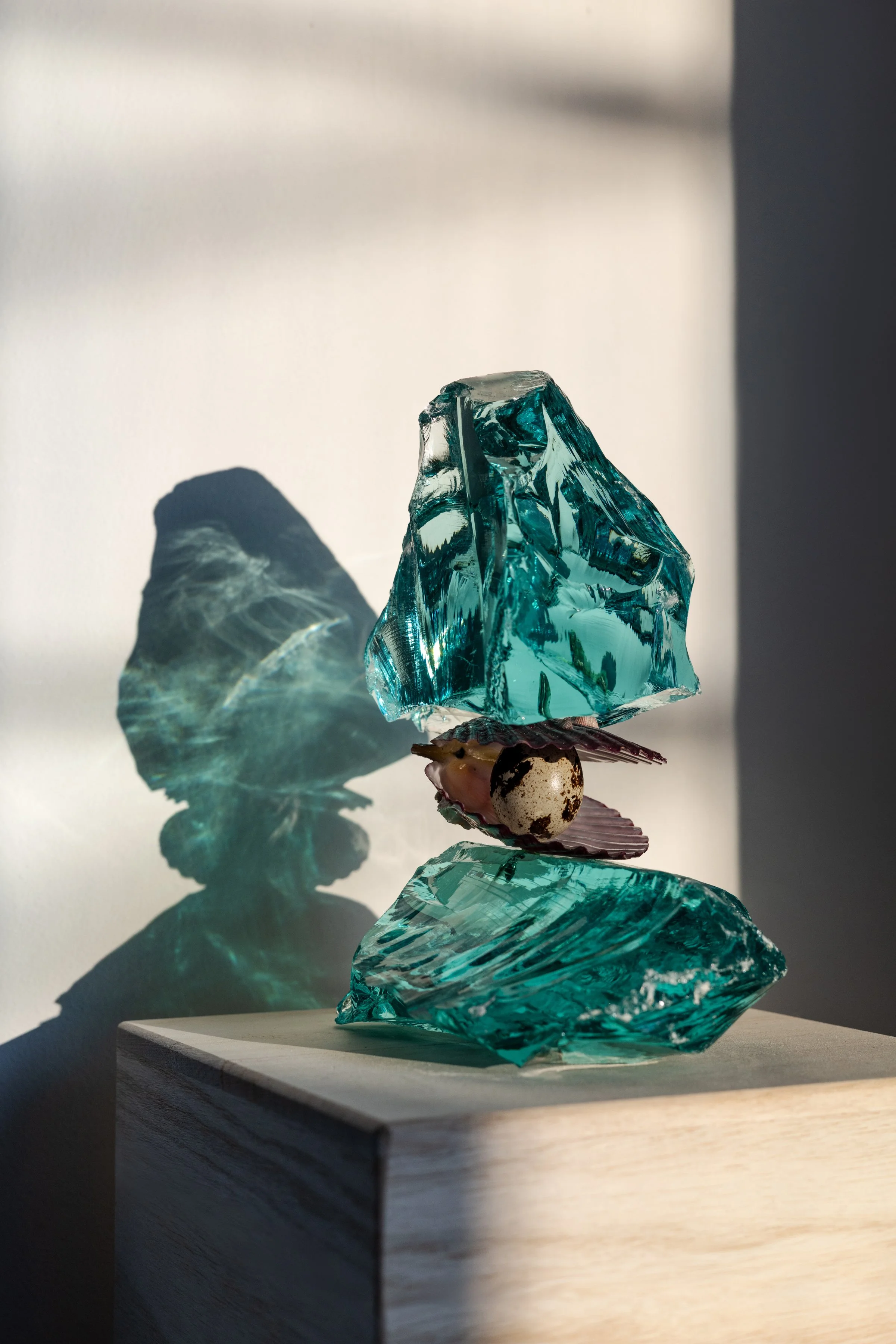
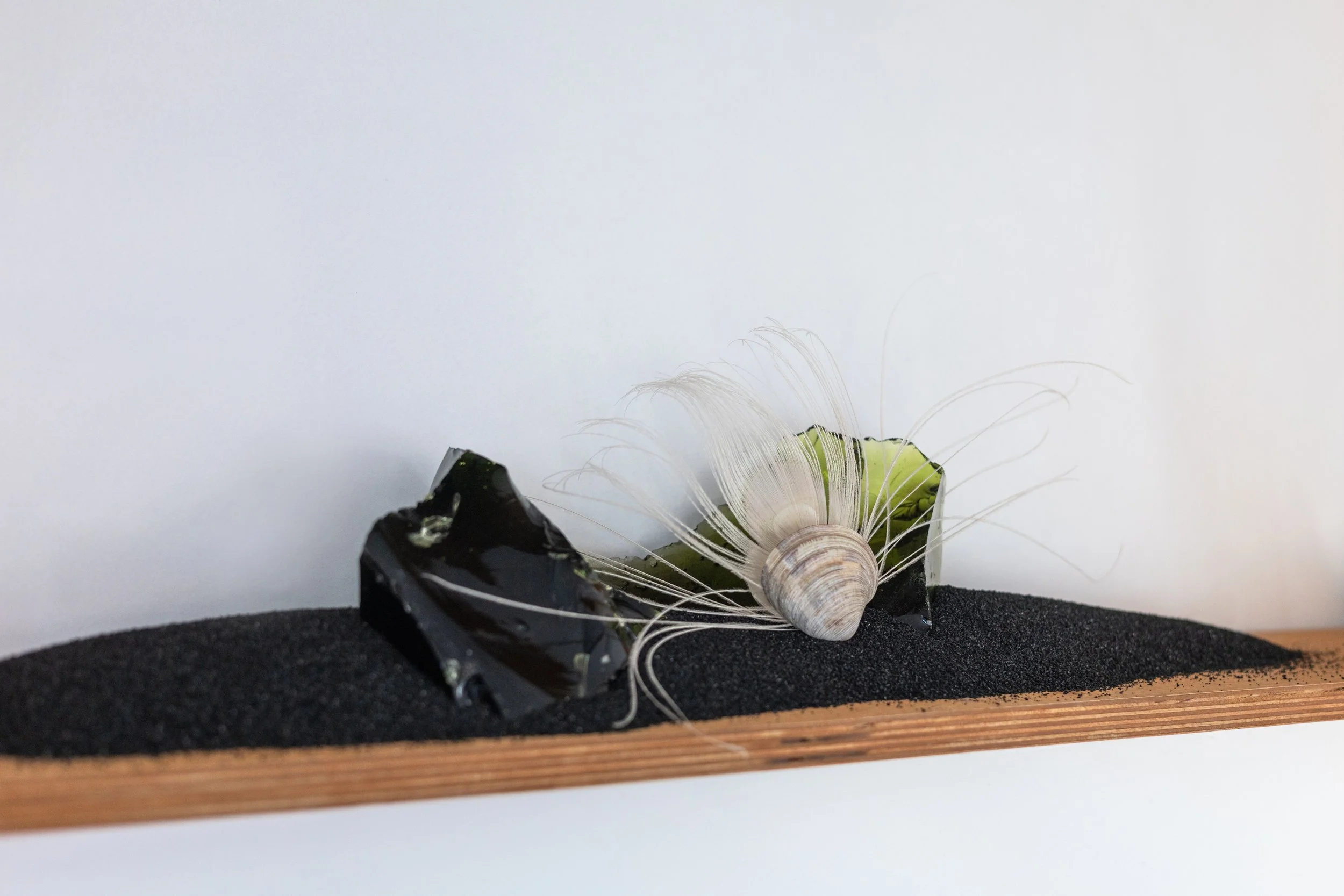
Alongside the central installation, McComb’s works extend Hydrohalo’s logic of suspension through construction rather than capture, consistently troubling the boundary between sculptural object and photographic image. Installation works such as Propulsion I (2026) and AquaAngel (White) (2026) exist in carefully staged states that appear already destined for photographic translation, while in the photographic work Pearl (2025) the camera similarly does not record an instant but arrests a constructed condition. Across both installation and image, objects—glass, shells, textiles—are placed, balanced, and illuminated in states of precarity that exist only within the work itself. Whether encountered as physical assemblage or photographic surface, these works function less as documents than as sculptural propositions, holding time in suspension and resisting any stable distinction between object and image.
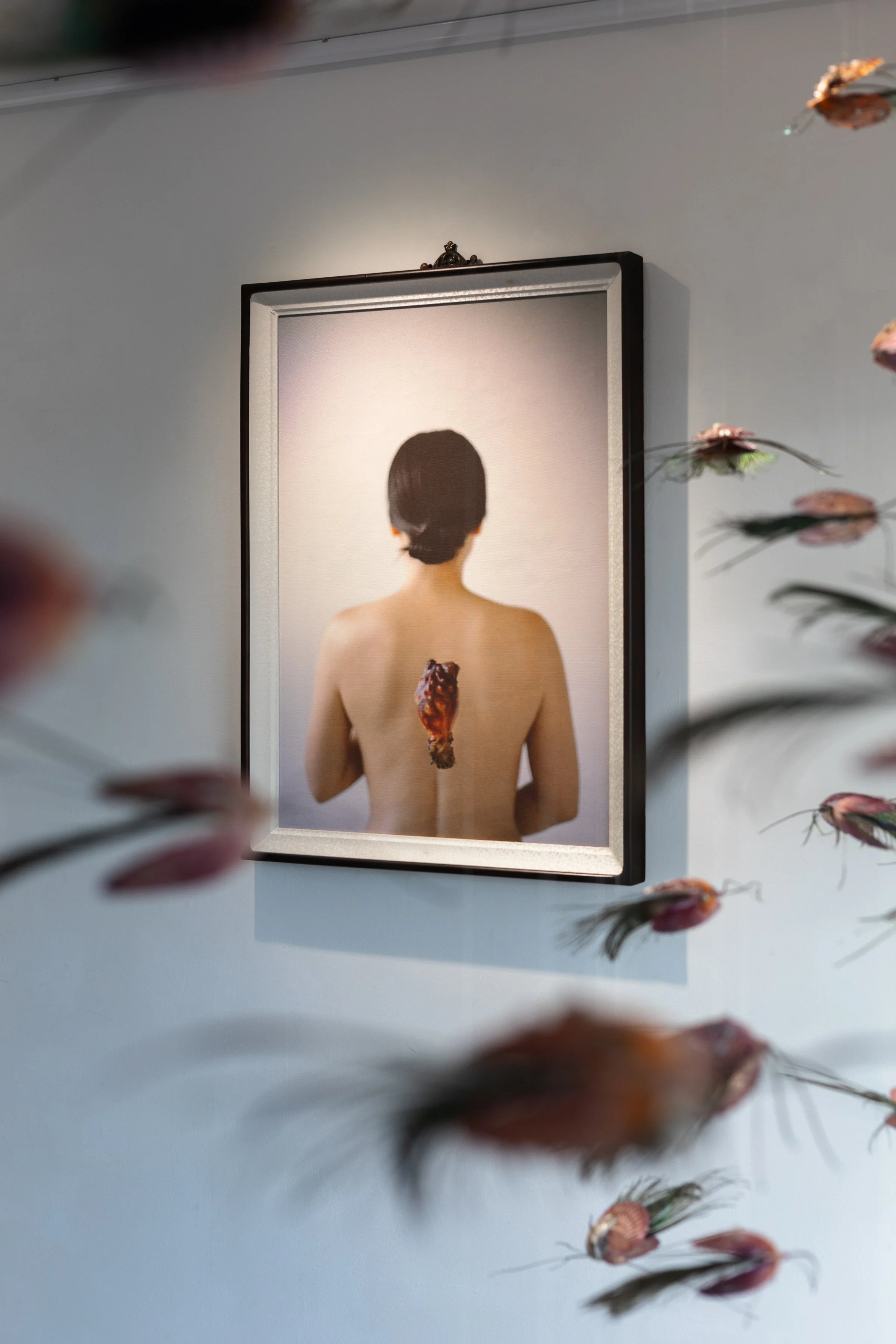
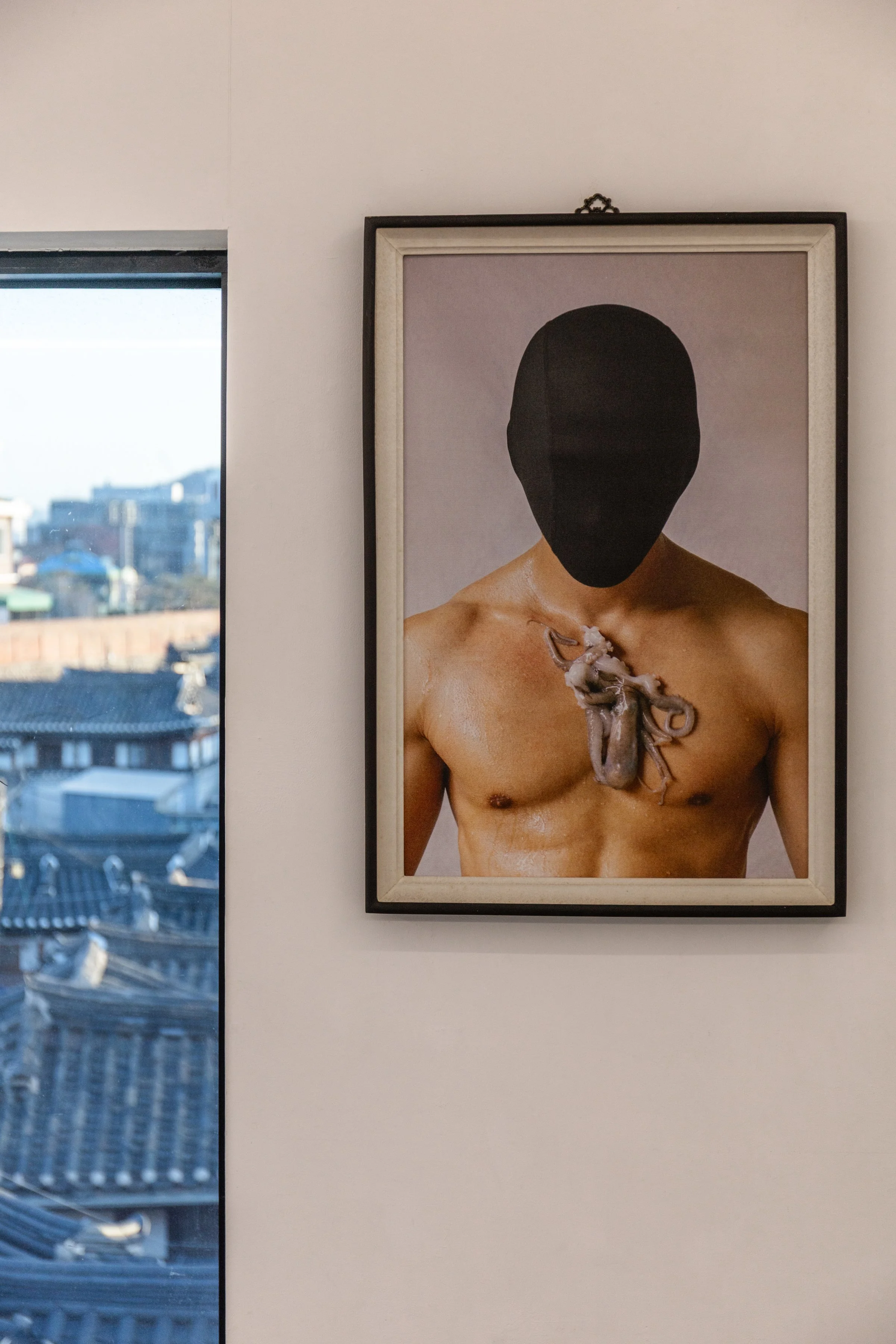
In this sense, McComb’s practice aligns less with narrative tableau photography than with a lineage of still-life and sculptural photography—from Walead Beshty and James Casebere to Laura Letinsky—in which the photograph constitutes the final state of an assembled constellation of materials. Meaning emerges not through social narrative or event, but through material tension and temporal suspension. Earlier works such as Ego (2021) and Heart to Back, Back to Heart (2021), with their masked figures and withheld faces, extend this logic by dissolving the subject’s ego and rendering the body another material surface within the composition. Across these images, staging produces a provisional ecology—one that mirrors the exhibition’s broader preoccupation with drift, buoyancy, and states of in-between.
In the context of the contemporary Korean art scene, Hydrohalo reads as both an insertion and a farewell. The exhibition enters a field that, in recent years, has increasingly embraced fluidity across identity, genre, and medium—conditions often theorised through queer frameworks within contemporary Korean art discourse—while also contending with the rapid redevelopment of the artist's neighborhood Bogwang-dong in Itaewon, a site that has historically functioned as an informal cultural infrastructure sustaining queer artistic practice, expatriate networks, and alternative forms of cultural production in Seoul. Within this context, Hydrohalo situates itself within a queer aesthetic framework in which water operates as a material analogue for non-normative subjectivity—fluid, contingent, and resistant to containment—without recourse to narrative declaration. McComb’s works absorb these conditions without illustrating them, staging instead an interiorised form of spatial and temporal instability shaped by duration, translation, and the experience of remaining deeply present while perpetually provisional.
Bachelard writes that to meditate on water is “to slip away, to go to the very source.” In Hydrohalo, that source is the bright, blue coasts of the artist’s childhood in Florida—carried into his life in Seoul and cast forward along a current that does not end here. The exhibition’s eight works, marking the artist’s eighth year in the city, unfold like stations along this current: shells that have learned to fly, glass made to resemble the sea that will never fully absorb it, images framed in textiles that are both home and not. Together, they propose a self not as a fixed portrait but as a mutable, luminous surface—something like a halo on water, visible only in relation to light, angle, and the momentary stillness of the viewer willing to look.